Showing posts with label iPad. Show all posts

Monday, March 28, 2011

Great apps for the iPad

In December, my boss got all of us iPads as an end-of-year gift. Since that time, I have tried to find the right applications that will turn the device into a real business tool. While there are some very large missing pieces, here are a three versatile applications that have made the iPad a worthwhile investment:

Taking Notes: So far, the killer app for note taking is still OneNote, from Microsoft. Unfortunately, the boys from Redmond have not made the application available for any of the Apple devices, including the iPad. Absent that, I use Notes Plus, available from iTunes. It comes with a variety of useful features, most notably a way to zoom in for hand-writing and drawing. I've tried EverNote and PenUltimate, and this app easily betters them.

Instant Messaging: Meebo is an instant messaging application that will give you access to multiple I/M accounts at once. After setting up an account at their website, add log-in credentials for the various I/M tools you use, like G-Mail, Facebook, AIM, MSN Messenger, etc. I don't believe that you can set up a group chat across accounts, but that's it's only shortcoming. Well, that and the fact that the current version is not optimized for the iPad. (I just hit the 2x button to make it easier to see.( They have not announced when an iPad version will be released, though a lot of users have requested it.

Task Management: I have a lot of clients, and remembering deliverables and tasks for all of them is really challenging. So I use Remember the Milk to manage and organize my tasks. After signing up at their website ($25/year subscription), you can manage all kinds of tasks from the web site and from the app on an iPad, iPhone and even a Droid phone. Like Meebo, no iPad-optimized version is yet available, nor have they announced one for release. Even so, it does a great job helping me keep one synchronized list of tasks managed and organized.

WEB SITES FOR ALL THREE APPS:
Notes Plus
Meebo
Remember the Milk

Monday, March 14, 2011

An interruption is coming

The news coming out of last week's devastating earthquake in Japan doesn't seem to be getting any better. As of this writing, engineers and other experts are working to stabilize a nuclear power facility that was seriously damage in the tremors. Nuclear power produces a significant amount (perhaps as much as one-third) of Japan's electricity, and the loss of a major supply point will have important long-term consequences.

Toshiba, in partnership with SanDisk, is the source of roughly 45% of the world's wafers for flash memory. Their primary manufacturing facility, located near Tokyo, saw its assembly line shut down for briefly due to the earthquake. These NAND chips are a critical component in a wide range of devices, including the iPad and smart phones. While production has resumed, its not clear how quickly transportation and other logistical concerns will be resolved. The wafers might end up sitting on shelves waiting for ships or trains to come and pick them up.

Demand for these devices is heating up. Apple has created a lot of buzz around its product line in the past two months by engaging Verizon and with the introduction of the iPad2. Samsung and Motorola have picked up their game with the Xoom and the Galaxy Tab. These are game changers, and we can expect senior sales professionals, junior executives and middle-managers to suddenly "need" them to do their jobs effectively. I expect that over the next 60 days, we'll begin to hear of waiting lists and backorders for these devices ... reports that will grow more common through the summer. If you intend to begin rolling them out to staff in the coming two quarters, plan accordingly.

For more, check out ... Toshiba Chip Production Resumes

Friday, October 22, 2010

More competition for the iPad

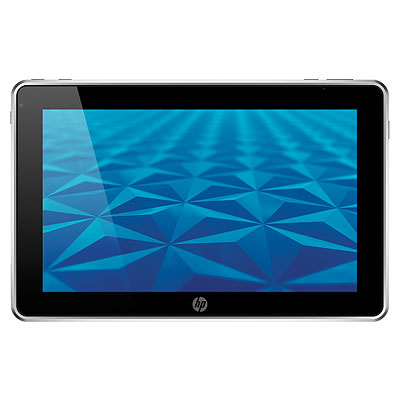
By now, you've probably heard about H-P's Slate 500 tablet, on sale at H-P for $799. It's a Windows 7 based machine, with a touchscreen and stylus. Will it pose a serious threat to the one that created the category? Or will it be a reprise of the old clunky Toshiba tablets from the early 2000's?


Well for one, H-P is marketing the Slate 500 as a Business tool, not a consumer tool. This is a key differentiator, since there is no Apps Store for Windows. But, with Windows 7 as the operating system, users will have the ability to utilize all sorts of already available programs on the device.

Furthermore, we all know that H-P is an innovator, not a price leader. Dell's flipper machine will be soon forgotten (hopefully) and I'm sure they are working hard to come up with a competitive tablet of their own.

Check out the HP Slate 500.

Monday, September 6, 2010

Competition for the iPad is coming

Back in April, when the iPad first hit the market, I suggested that this revolutionary device represents a turning point in mobile computing. For that to happen, of course, other manufacturers will have to try and beat Apple at its own game. Samsung appears to be the first to enter the fray, introducing the Galaxy Tab last week. The company expects to launch the device in European markets by mid-October and in the US market in the months that follow.

The most obvious difference between the iPad and the Galaxy Tab is the size, with the Galaxy being much smaller - a 7" screen size. Samsung has positioned the product to be easily carried in pocket or purse. Of course, the iPad has a huge head start in available applications and adoption. But the Galaxy is based on the Android v2.2. operating system, so we shouldn't expect that lead to last forever.

So the Android-based phones have proven to be worthy competitors to the iPhone. Will Android-based tablets enjoy similar success. I believe that the answer will be yes. The price point for the Galaxy is expected to be $200-300 ... or about the same as the entry-level iPad. It won't have the same functionality or elegance as the iPad for another year or so, but neither did the Android-based phones.

Eventually, I truly believe that the mobile computing market will look a lot like the desktop market. Apple will consistently own a substantial minority - 10-15% - of the market. Users who value innovation and elegance will make up their loyal and passionate base. The rest of the market ... those who value economy and utility ... will gravitate towards the Android.

The Galaxy Tab Homepage
Warning: the music is loud and little annoying

Thursday, August 26, 2010

E-Book sales surpass Book sales

We knew this day was coming ... and it did about 5 weeks ago. Amazon announced, and the major publishers have confirmed that they sold 43% more e-book copies than hardback copies during the second quarter of the year. Celebrated novelist James Patterson has sold more 1 million e-books and other popular writers are seeing similar results.

Although digital book sales account for only 6% of the American consumer book market, it's only a matter of time before paperbacks and hardbacks are relegated to the minority. Right now the primary constraint is the entry-cost. A Kindle is $139, and it does only one thing. Tests of the Kindle for textbooks were unsuccessful, so that will cut into the growth curve. So that means that a person will have to fork over 2 weeks' worth of groceries for a highly discretionary, single-purpose device. Clearly, plenty of people have decided that it's worth the cost, but I don't see that as being sustainable.

All in all, the e-book phenomenon reminds me of the evolution of the cell phone market. In the early 1990's, hard-working men and women handed over $500 for a device that, by today's standards, was laughably limited. For that kind of cash, plus a monthly fee of $75-100, you got a carphone, with maybe 99 speed dial numbers and a hole in your roof for the antenna. Less than two decades later, the BlackBerry - that venerable standard-bearer - has been rendered obsolete by phones that my teenage daughter can afford.

I see this playing out in one of two ways. Either the Kindle we become essentially free ... less than $50; or advanced devices like the iPad will become the de facto digital book readers for the American middle-class. My money is on the latter scenario. An iPad might be 4x the price of a Kindle, but it does far, far more. Once a competitive product comes out, like a Droid or even a Windows Mobile tablet, the market will explode. Price will no longer be a significant barrier for the middle market. And publishers will have to completely rethink their business model... just like the music industry did.

What do you think?

Credit where credit is due:
I got the idea for this post from reading these two articles ...
WSJ Tech Digits: New Thriller Sells More E-Books Than Hardcovers (link requires subscription)
The Guardian (UK): Amazon's ebook milestone: digital sales outstrip hardbacks for first time in US